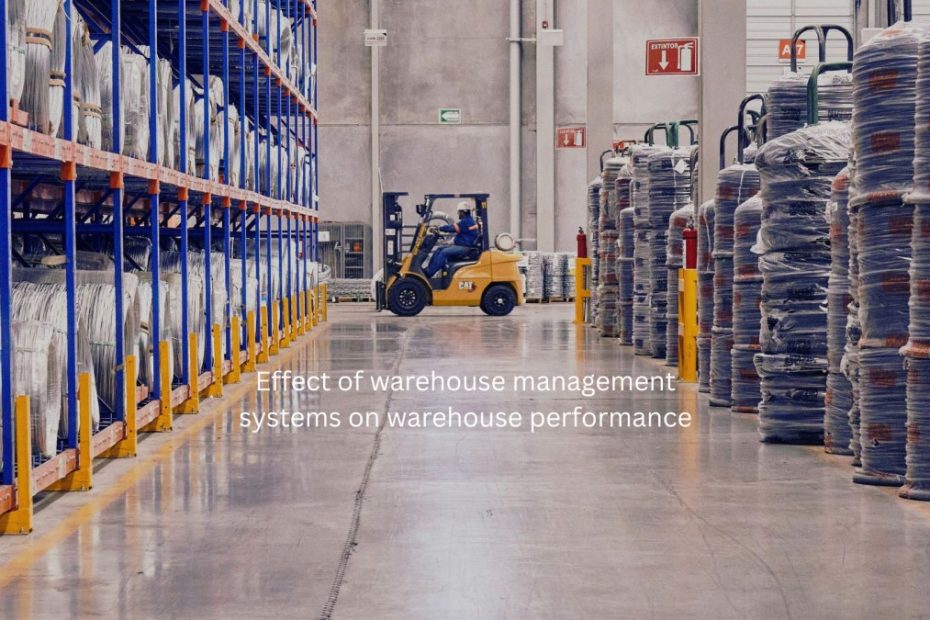

Warehouse management systems have been shown to improve the performance of warehouse activities in terms of effectiveness, efficiency, and productivity.
The following are various empirical studies on the effect of warehouse management on performance.
The effect of warehousing management on warehouse performance at Tema Oil Refinery (TOR), Ghana
This study examined the influence of warehouse management (receiving, storage, put-away, order picking, and shipping) on warehouse performance at Tema Oil Refinery (TOR), Ghana. The target population included 135 employees from the department of warehouse management, transportation management, and customer response. 101 participants were drawn from the three departments using convenience sampling. Primary data collection was accomplished using questionnaires. Data analysis was done using both descriptive and inferential statistics. Regression analysis using ANOVA was done to establish the relationship between the variables under study. The results were presented in relevant tables (Adjei et al., 2025).
The findings indicated that improving the receiving part of the warehouse management increases warehouse performance, all other factors remaining constant. The findings also indicated a positive and significant relationship between shipping and warehouse performance. This implies that an increase in shipping leads to a subsequent increase in warehouse performance. The put-away function was also found to have a positive and significant relationship with warehouse performance. This means that an improvement in this function leads to a corresponding improvement in warehouse performance. The order picking function was shown to have a negative but significant impact on warehouse performance. This means that an increase in picking results in a decrease in warehouse performance. The storage function was shown to have a positive and significant effect on warehouse performance. This implies that if other factors remain constant, an increase in the storage function leads to an improvement in warehouse performance (Adjei et al., 2025).
Warehouse management practices and performance of distribution firms in Nairobi City County, Kenya
This study investigated the influence of inventory management and warehouse technology on the performance of Nairobi City County. The target population included 1061 distribution firms in the study area. 290 respondents were drawn from the target population. Questionnaires were the main tools for data collection, allowing researchers to gather quantitative data on various factors affecting the distribution firms. Data analysis was accomplished using descriptive statistics, Pearson correlation analysis, and multiple regression analysis. The regression model was used to establish the relationship between the dependent and independent variables. The results were presented in appropriate tables using frequencies, percentages, mean, and deviation (Rotich & Ndeto, 2024).
The findings indicated that inventory management has a positive and significant effect on the performance of distribution firms in the study area. Also, the results revealed that warehouse technology has a positive and significant effect on the performance of distribution firms in the study area (Rotich & Ndeto, 2024).
Warehouse management practice and performance of pharmaceutical firms in Enugu State, Nigeria
This study examined the effect of raw materials, or components, on the market expansion of pharmaceutical firms in Enugu State. The study also explored the effect of finished goods maintenance on customer satisfaction of pharmaceutical firms in the study area. The target population included all the 349 employees of three pharmaceutical firms in Enugu Estate. A structured questionnaire was used for data collection. Descriptive statistics including frequencies and percentages were used in data analysis. Regression analysis was used to test hypotheses. The findings were presented in appropriate tables (Udoh et al., 2024).
The findings revealed a positive and significant effect of finished goods maintenance on customer satisfaction in the target firms. In addition, the results indicated a positive and significant influence of raw materials or components on market expansion in the target organizations (Udoh et al., 2024).
Effect of warehouse management systems on the performance of private warehouses in Southern Zimbabwe
This study explored the influence of enterprise resource planning, radio frequency identification technology, and warehouse management systems on organizational performance. The target population included the 2000 managerial and non-managerial staff at private warehouse companies operating in Southern Zimbabwe. Using a convenient sampling technique, a sample size of 322 participants was selected to take part in the study. Questionnaires and interview guides were used to collect primary data from the respondents. The collected data was analyzed using descriptive (frequencies, percentages, mean, deviation) and inferential statistics. The results were presented using relevant tables (Mazikana, 2023).
The findings revealed that effective warehouse management leads to reduced costs as well as improves the competitive advantage of the corporation. Effective warehouse management also helps the organization to become profitable by increasing its sales (Mazikana, 2023).
Investigation of warehouse management systems and their impact on business performance in the textile industry
This study investigated the warehouse management system of the GVG Paper Mills Private Company Limited. It also sought to establish the efficiency of issuance of materials for processing and storage. Thirdly, it also explored employee awareness of the warehouse management system used in the company. The target population included 150 employees of the target company. Descriptive statistics were used in data analysis. The chi-square test and Pearson correlation analysis were used to establish the association between the dependent and independent variables. The findings were presented in tables, charts, and graphs (Padmaavathy & Dhamodharan, 2023).
The findings indicated that the success of manufacturing businesses is assisted by effective warehouse management systems. The results also showed that effective implementation of inventory management activity is key to enhancing the performance of the organization. Ultimately, the researchers proposed that warehouse management activity is progress and not perfection. So, all effort should be focused on continuous improvement of the entire warehouse management system (Padmaavathy & Dhamodharan, 2023).
Impact of warehouse management factors on performance improvement of the 3rd party logistics industry in Sri Lanka
This study sought to establish the effect of operational, economical, and environmental factors on labor productivity performance, warehouse space utilization, and customer satisfaction in the third-party logistics (3PL) industry in Sri Lanka. The target population included four third-party logistics companies in the target location. 130 participants took part in the study. Data collection was done using questionnaires. Data analysis was achieved using descriptive and inferential statistics. Multiple regression analysis was used to explore the variance of the independent variable as dictated by the independent variables. The results were presented using appropriate tables (Kodithuwakku et al., 2022).
The findings revealed a strong positive relationship between operational, economical, and environmental factors and labor productivity performance. Secondly, the results showed a moderate positive relationship between the operational, economic, and environmental factors and warehouse space utilization. Thirdly, the findings revealed a moderate positive relationship between operational, economical, and environmental factors and customer satisfaction. Last but not least, the results indicated a moderate positive relationship between operational, economical, and environmental factors and warehouse performance (Kodithuwakku et al., 2022).
The effect of warehouse management on warehouse performance
This study investigated the effect of receiving, storage, put-away, order picking, and shipping on warehouse performance in Modjo Dry Port, Ethiopia. The target population included 155 staff members of the target organization. The study used a sample size of 112 workers drawn from the departments of transport management, warehousing management, and customer response. Data collection was done using questionnaires. Differential analysis and inferential statistics (correlation) were used in the study. Multiple regression analysis was used to explore the relationship between the dependent and independent variables. The findings were presented in relevant tables accordingly (Kidane, 2021).
According to the findings, receiving was found to have a positive and significant influence on warehouse performance. This means that if warehouse receiving operation is improved, warehouse performance will also improve. Shipping was also found to have a positive and significant influence on warehouse performance. This means that improving the shipping function leads to a subsequent increase in warehouse performance. Put-away was also shown to have a positive and significant impact on warehouse performance. This means that increasing put-away results in a corresponding increase in warehouse performance. Order picking was shown to have a negative and significant influence on warehouse performance. This implies that though the influence of order picking is negative in the case of that target company, it still contributes to warehouse performance. Storage was found to have a positive and significant influence on warehouse performance. This means that, if storage increases, warehouse performance will also increase accordingly (Kidane, 2021).
Effects of warehouse management practices on organizational performance of logistical firms in Mombasa, Kenya
This study investigated the effect of receiving processes, tracking of goods, physical storage, and order processing on organizational performance in logistical firms based in Mombasa, Kenya. The target population included 532 registered logistical companies operating in the port of Mombasa. 228 participants were drawn from the senior management staff in the target firms. Data collection was done using a questionnaire. Quantitative data was analyzed using descriptive and inferential statistics. Pearson correlation and regression analysis were used to establish the relationship between the variables under investigation. The results of data analysis were presented using frequencies, percentages, mean, and standard deviation. (Omondi, 2021).
The findings indicated that all the warehouse management practices, that is, the receiving process of goods, tracking of goods to and from the warehouse, physical storage facilities, and order processing, all have a positive and significant influence on the performance of logistical firms in Mombasa port (Omondi, 2021).
Effect of warehousing practices on organizational performance: A case of My Wish Enterprise P.L.C.
This study examined the effect of receiving activity, put-away activity, storage activity, order picking activity, and shipping activity on the performance of My Wish Enterprise. The target population included all 65 warehouse staff at MWE, including employees of other departments with a direct relationship with the warehouse. Primary data for the study were collected using questionnaires. Quantitative data were analyzed using descriptive as well as inferential statistics. In the descriptive analysis, frequencies, percentages, and means were used. In inferential statistics, a correlation test was used to determine the relationship that existed between each variable for each hypothesis. The results were presented using appropriate tables (Tesfay, 2019).
According to the results, the contribution of receiving activity to the performance of MWE was both positive and significant. Specifically, 26.7 percent of receiving activity was shown to positively explain the performance of MWE. The put-away activity was also shown to have a positive and significant contribution to the performance of MWE. In this regard, the findings showed that 1.7 percent of put-away activity can positively explain the performance of MWE. In addition, the results established that storage activity had a positive and significant contribution to the performance of MWE. Specifically, storage activity was found to have a 17 percent effect on organization performance at MWE. Also, the results showed that shipping activity had both a positive and significant contribution to the performance of MWE. Specifically, it was found that 45.7 percent shipping activity can positively explain performance at MWE. On the other hand, the findings revealed that order-picking activity had a positive but insignificant contribution to the performance of MWE. Specifically, 17.1 percent of order-picking activity was found to have a positive but insignificant effect on MWE performance (Tesfay, 2019).
Citation
Adjei, K., Emmanuel, A.A., and Cyril, A.K. (2025). The effect of warehousing management on warehouse performance at Tema Oil Refinery (TOR), Ghana. American Journal of Economics and Business Innovation (AJEBI), 4(2), 272-279.
Kidane, A.B., Ayenew, Z., and Aboye, T. (2021). The effect of warehousing management on warehouse performance: A case of Modjo Dry Port, Ethiopia. A master’s thesis submitted to the School of Graduate Studies of Jimma University, Ethiopia.
Kodithuwakku, P.I.E., Wijayanayake, A.N., and Kavirathna, C.A. (2022). Impact of warehouse management factors on performance improvement of the 3rd party logistics industry. Smart Computing and Systems Engineering.
Mazikana, A. (2023). The effect of warehouse management systems on the performance of private warehouses in Southern Zimbabwe. Unpublished Master’s Thesis.
Omondi, F.O. (2021). Effects of warehouse management practices on organizational performance of logistical firms in Mombasa, Kenya. Unpublished Master’s Thesis submitted to the School of Business and Economics, Moi University, Kenya.
Padmaavathy, P.A. and Dhamodharan, S. (2023). Investigation of warehouse management systems and their impact on business performance in the textile industry. E3S Web of Conferences 449.
Rotich, V.C. and Ndeto, C. (2024). Warehousing management practices and performance of distribution firms in Nairobi City County, Kenya. International Journal of Social Sciences Management and Entrepreneurship, 8(4), 1110-1127.
Tesfay, H.K. (2019). Effect of warehousing practices on organizational performance: A case study of My Wish Enterprises P.L.C., Ethiopia. Unpublished Master’s Thesis submitted to the School of Commerce, Addis Ababa University.
Udoh, Lydia, Oluka, and Ugochukwu (2024). Warehouse management practices and performance of pharmaceutical firms in Enugu State, Nigeria. Academic Journal of Current Practice in Business and Management, 9(5).
Related Post: Effect of organizational structure on business performance PDF download
Also Read: Factors affecting growth of small and medium-sized business enterprises (SMEs) PDF download